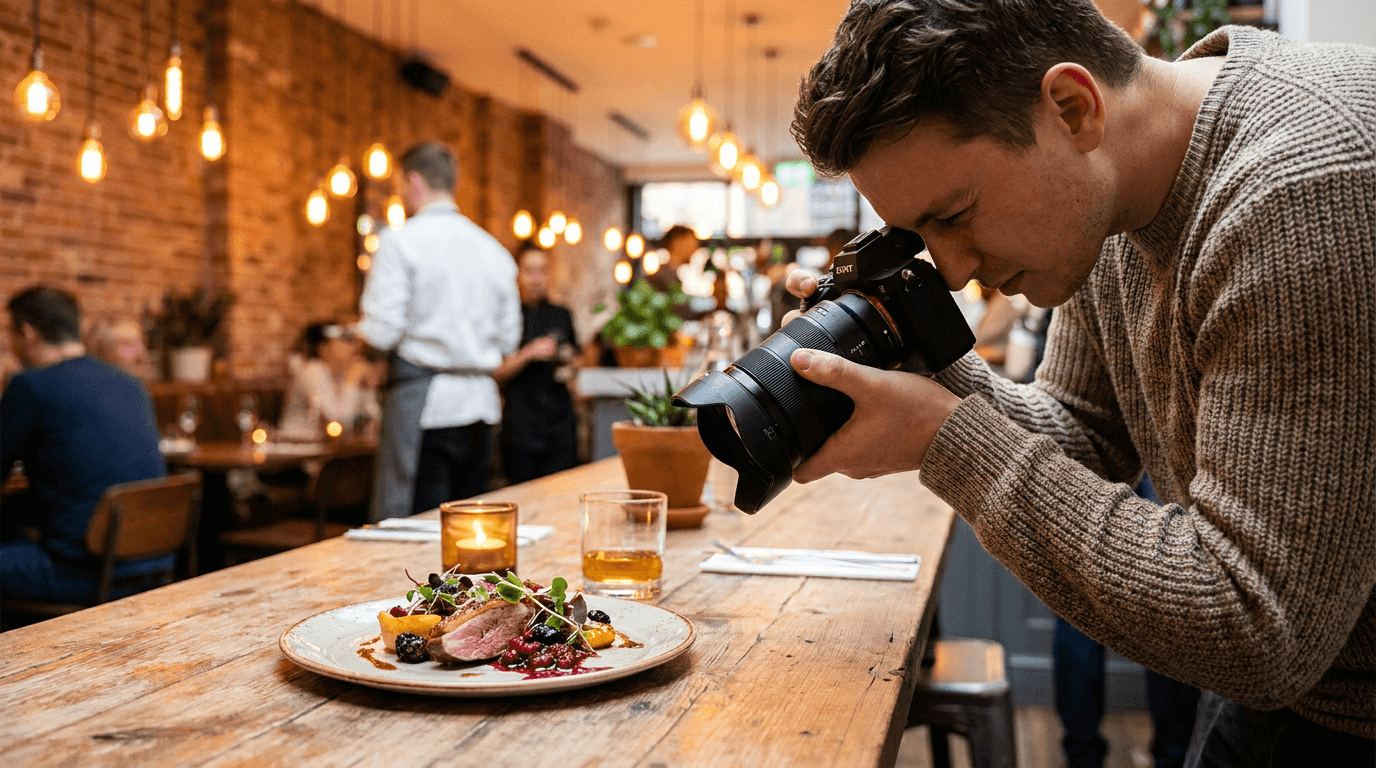
A guest visits a restaurant for the first time, enjoys the meal and leaves satisfied.
That is a successful visit. It is not yet customer loyalty.
Loyalty begins when the guest has a clear reason to return—and enough confidence that the next experience will also be worth their time and money.
Restaurants often approach loyalty through discounts, points, newsletters or promotional messages. These tools can help, but they are not the foundation.
A guest rarely returns because a restaurant owns a marketing system. Guests return because the experience was reliable, the food matched expectations, communication was clear and the next visit felt easy.
Customer loyalty in hospitality is the relationship that makes a guest choose the same restaurant again, recommend it and use its direct channels even when other options are available.
Digital tools can strengthen that relationship by making communication, ordering and recognition more consistent. They cannot compensate for unreliable service, unclear waiting times or a disappointing product.
Key takeaways
- Restaurant loyalty begins with a dependable guest experience, not a discount campaign.
- Guests are more likely to return when quality, information and service are consistent.
- Digital menus, direct ordering, WhatsApp and email can support loyalty when messages are useful and appropriately timed.
- Offers should reward a desired relationship rather than train guests to wait for discounts.
- Complaints and operational mistakes can damage loyalty, but a clear recovery process can preserve trust.
- Success should be measured through repeat behaviour, direct relationships and feedback—not message volume alone.
- Personal data and communication preferences must be handled carefully and according to applicable requirements.
What does customer loyalty mean in hospitality?
Customer loyalty is more than satisfaction.
A satisfied guest may still choose another restaurant next time because it is closer, cheaper or more visible at that moment.
A loyal guest has developed a preference.
That preference may be based on:
- consistent food quality
- friendly and recognisable service
- confidence in waiting and preparation times
- a menu that is easy to understand
- reliable handling of special requests
- convenient direct ordering
- a pleasant atmosphere
- a sense that the restaurant understands its own guests
- a positive response when something goes wrong
Loyalty does not mean that the guest never visits another restaurant.
It means that your restaurant remains a trusted and relevant choice.
Loyalty starts before the marketing message
Before designing campaigns, vouchers or membership ideas, a restaurant should review the experience guests already receive.
Ask:
- Is the menu accurate?
- Are unavailable items communicated early?
- Do opening and ordering times match reality?
- Are pickup times realistic?
- Does service remain understandable during peak periods?
- Can guests ask for help easily?
- Are complaints handled consistently?
- Does the restaurant deliver the same basic promise across channels?
A promotional message can bring a guest back once.
If the operational experience is unreliable, the message will not create a lasting relationship.
Customer loyalty is not created by sending more messages. It is created by giving guests a reason to trust the next visit.
The restaurant loyalty journey
| Stage | What the guest needs | Loyalty risk when it fails |
|---|---|---|
| Discovery | Clear positioning, current information and an understandable menu | The guest forms the wrong expectation before visiting. |
| Decision | Opening times, availability, prices and ordering options that can be trusted | The guest abandons the visit or feels misled. |
| Ordering | A simple channel, clear options and confirmation | The process feels difficult or the order contains mistakes. |
| Waiting | Realistic expectations and visible communication | Uncertainty becomes frustration. |
| Food and service | Consistent quality, attention and correct fulfilment | The restaurant fails at its core promise. |
| Payment and departure | A clear bill, convenient completion and a positive final interaction | The last impression is rushed or confusing. |
| After the visit | A relevant reason to return and an easy direct channel | Communication feels generic, excessive or unrelated. |
| Recovery | A fair and understandable response when something goes wrong | A small problem becomes a permanent loss of trust. |
Loyalty is created across this complete journey. A newsletter cannot repair every earlier failure, and a discount cannot replace a clear recovery process.
Consistency is more powerful than novelty
Restaurants often search for new campaigns before fixing inconsistency.
For many guests, the strongest loyalty signal is predictability:
- the dish tastes as expected
- the order is complete
- the waiting time is understandable
- staff can answer common questions
- prices and availability match the current menu
- pickup works as promised
- service quality does not collapse completely during busy periods
Consistency does not require every visit to feel identical.
It means the restaurant reliably delivers its core promise.
A seasonal menu, event or new digital feature can add interest. It should not create uncertainty about the basics.
Make direct relationships easier
Restaurants often depend on third-party platforms for discovery and ordering.
Those channels may be useful, but loyalty becomes stronger when guests also know how to interact with the restaurant directly.
Direct touchpoints may include:
- the restaurant website
- a digital menu
- QR ordering
- direct web ordering
- reservations
- digital vouchers
- a recognisable pickup experience
The objective is not to force every guest into one channel.
The objective is to make the restaurant’s own channels useful enough that returning guests choose them voluntarily.
A direct channel should offer a clear benefit, such as:
- easier reordering
- accurate menu information
- direct communication
- clear pickup instructions
- restaurant-specific offers
- event information
- fewer unnecessary steps
Direct guest relationships can be supported through Digital Menu and QR Ordering, Online Ordering, WhatsApp Ordering and the Restaurant Management System.
Relevant communication beats frequent communication
A restaurant may have several ways to contact guests.
The number of channels is less important than the relevance of the message.
Useful communication may include:
- seasonal dishes
- changed opening hours
- special events
- reservation availability
- limited menus
- pickup information
- a new direct-ordering option
- a voucher that matches the guest relationship
- a sincere follow-up after a problem
Messages become irritating when they are:
- too frequent
- identical for everyone
- disconnected from the restaurant experience
- based only on discounts
- unclear about the offer
- sent without respecting communication preferences
- impossible to stop easily
Good communication answers a simple question:
Why is this useful to this guest now?
Choose the right channel for the message
Website
The website should provide reliable information that guests may actively search for:
- menu
- opening hours
- location
- ordering
- reservations
- events
- contact
- accessibility information where maintained
It is the restaurant’s public reference point.
Digital menu
A digital menu can support loyalty by making products, options, availability and multilingual information easier to understand.
It may also highlight seasonal dishes or relevant additions without interrupting the guest with a separate campaign.
WhatsApp can be useful where guests already expect direct conversation or order-status communication.
It should not become a stream of unrelated promotional messages.
Structured ordering information should remain separate from informal free-text conversations where possible.
Email or newsletter
Email works well for information that does not require an immediate response:
- seasonal changes
- events
- menu launches
- restaurant news
- carefully selected offers
Messages should be easy to understand and appropriately spaced.
In-restaurant communication
Menus, table displays, receipts and staff recommendations can invite guests to use a direct channel again.
This moment should remain helpful rather than aggressive.
Discounts are a tool, not a loyalty strategy
Discounts can encourage a return visit, introduce a new product or reactivate an inactive relationship.
They can also create problems.
If offers are constant, guests may learn:
- to delay ordering until a discount arrives
- to perceive the regular price as too high
- to focus on the reward instead of the restaurant
- to switch as soon as another restaurant offers more
A thoughtful offer has a clear purpose.
Examples:
- introduce a quieter service period
- encourage direct ordering
- support a seasonal menu
- thank a returning guest
- recover a relationship after a documented problem
- create a useful voucher for a future visit
Avoid offers that are:
- permanently available
- difficult to understand
- unrelated to restaurant capacity
- operationally impossible during peak periods
- likely to attract demand the kitchen cannot fulfil
- presented as guaranteed personalised rewards without the necessary guest data and consent
Loyalty rewards should be easy to understand
Where a restaurant uses vouchers, rewards or repeat-visit benefits, guests should be able to understand:
- what they receive
- what they need to do
- when the benefit applies
- which products or channels are included
- whether the benefit expires
- how it is redeemed
- what happens if an order changes
Complex programmes create questions for service staff and disappointment for guests.
A simple benefit used consistently can be more effective than a sophisticated programme nobody understands.
Recognition does not need to feel intrusive
Guests appreciate recognition when it helps.
They may value:
- remembering a documented dietary preference where appropriate
- recognising a returning reservation guest
- understanding a repeated pickup request
- receiving communication in a preferred language
- being contacted through the channel they selected
Recognition becomes uncomfortable when the restaurant appears to know more than the guest expected or uses information for unrelated promotion.
Use guest data with restraint.
The restaurant should collect only information that has a clear operational or communication purpose, maintain appropriate permissions and follow applicable privacy and direct-marketing requirements.
Service recovery is part of customer loyalty
Every restaurant eventually makes mistakes.
An item is delayed. A modifier is missed. An order arrives incomplete. A guest receives unclear information.
The mistake matters.
The response often matters just as much.
A practical recovery flow may include:
- acknowledge the problem without arguing
- identify what happened
- assign one person to own the response
- explain the available solution clearly
- correct the order where possible
- record the operational cause
- follow up when the issue justifies it
- adjust the process if the same problem repeats
Not every complaint requires a discount.
Sometimes the most valuable response is:
- a clear explanation
- a corrected order
- realistic timing
- a sincere apology
- visible ownership
- evidence that the restaurant took the feedback seriously
A voucher may support recovery, but it should not replace fixing the cause.
Feedback should be easy and useful
Guests should have a clear way to provide feedback without needing to publish a public review first.
Possible touchpoints include:
- a short post-visit question
- a website contact option
- a reservation follow-up
- a direct WhatsApp conversation
- an in-restaurant QR feedback route
- a staff invitation to raise a concern
Do not ask twenty questions after every visit.
A useful feedback process focuses on a few operational questions:
- Was the order correct?
- Was the waiting time understandable?
- Was it easy to get help?
- Was the pickup or table handoff clear?
- Is there one thing the restaurant should improve?
Feedback must reach someone who can act on it.
Collecting comments without ownership does not improve loyalty.
Segment communication without becoming impersonal
Not every guest should receive the same message.
Useful operational segments may include:
- reservation guests
- direct online-order guests
- pickup guests
- guests interested in events
- guests using a specific location
- guests who explicitly selected a communication channel
- guests who have not returned for a defined period
Segmentation should remain understandable and purpose-driven.
Avoid creating detailed profiles merely because the technology allows it.
A restaurant should be able to explain:
- why the guest is in the group
- why the message is relevant
- which data was used
- how the guest can change the preference
Common customer-loyalty mistakes
Starting with discounts
The restaurant tries to buy a repeat visit before creating a reliable first experience.
Sending the same message to everyone
A general promotion may be irrelevant to many guests.
Communicating too frequently
The restaurant becomes easy to ignore or mute.
Using several disconnected guest lists
Email, WhatsApp, reservations and direct orders create separate records that the team cannot manage consistently.
Ignoring the restaurant’s capacity
A successful promotion can damage the guest experience when the kitchen and service cannot handle the demand.
Measuring only redemptions
A voucher may be redeemed without creating a long-term relationship.
Treating a complaint as a marketing opportunity
Guests first need a fair response to the problem.
Making benefits difficult to redeem
Complicated rules create pressure for service staff and frustration for guests.
Collecting data without a clear purpose
More data does not automatically produce better hospitality.
How to build a practical loyalty approach
1. Define the repeat behaviour
Choose the behaviour that matters.
Examples:
- a second dine-in visit
- another direct pickup order
- booking the next event
- moving from a marketplace to a direct channel
- returning during a quieter period
- using the restaurant’s own website or WhatsApp ordering route
2. Review the current experience
Map the journey from discovery to after the visit.
Identify:
- unclear information
- unnecessary waiting
- repeated guest questions
- menu inconsistencies
- pickup confusion
- complaint handoffs
- communication gaps
3. Choose one useful touchpoint
Examples:
- a clear direct-ordering link
- a relevant post-visit message
- a seasonal menu announcement
- a future-use voucher
- an event invitation
- a feedback request
4. Define consent and preference handling
Clarify:
- which channel the guest selected
- what type of communication is expected
- how preferences are stored
- how the guest stops communication
- who has access
- how long information is needed
Follow applicable requirements.
5. Prepare operations before promotion
Confirm that:
- the advertised items are available
- the kitchen can support expected demand
- staff understand the offer
- redemption rules are clear
- the website and menu match the campaign
- service recovery is defined
6. Run a controlled test
Start with one audience, one message and one measurable objective.
Avoid changing several variables at once.
7. Review behaviour and feedback
Assess:
- Did guests use the direct channel?
- Did the offer create operational pressure?
- Did staff understand the process?
- Did guests ask unexpected questions?
- Did the communication lead to another visit or order?
- Did complaints or opt-outs increase?
8. Expand only what proves useful
Keep the message, channel or benefit only when it creates value for guests and the restaurant.
How should customer loyalty be measured?
No single metric represents loyalty.
Use a balanced view.
Useful indicators may include:
- repeat-visit or repeat-order rate
- time between visits
- share of direct orders
- returning reservation guests
- number of guests using a selected direct channel
- voucher redemption
- redemption followed by another non-discounted visit
- feedback response rate
- complaint-resolution time
- unresolved complaint rate
- communication opt-outs
- direct-ordering abandonment
- guest-reported ease of ordering
- use of multiple restaurant locations where relevant
Interpret metrics carefully.
For example:
A high voucher-redemption rate may show that the offer was attractive. It does not prove that guests became loyal.
A growing direct-order share may show stronger guest relationships, but it can also be influenced by pricing, channel availability or marketing activity.
Use trends together with operational feedback.
Loyalty by restaurant concept
Full-service restaurant
Focus on:
- recognition
- reservations
- service consistency
- special occasions
- menu guidance
- complaint recovery
- reasons to return beyond discounts
Café or bar
Focus on:
- convenience
- routine visits
- seasonal products
- events
- quick repeat ordering
- clear opening information
Pickup and delivery
Focus on:
- order accuracy
- realistic timing
- packaging
- status communication
- easy direct reordering
- clear problem resolution
Hotel and mixed hospitality
Focus on:
- guest context
- several service areas
- language
- repeated stays
- consistent communication between departments
Multi-location restaurant
Focus on:
- recognisable brand experience
- location-specific availability
- consistent basic policies
- central communication with local relevance
How Robexa can support connected guest touchpoints
Robexa is designed as a modular restaurant platform.
Depending on configuration, restaurants may connect guest-facing touchpoints such as:
- digital menus
- QR ordering
- direct web ordering
- WhatsApp ordering
- vouchers and discount codes
- restaurant websites
- multilingual communication
- management visibility
The objective is not to send more promotions.
It is to make menu information, ordering, communication and operational fulfilment more consistent across the guest journey.
Not every restaurant needs every module.
Start with the guest experience or communication gap that currently causes the most confusion, manual work or lost direct relationships.
Depending on configuration, Robexa can connect the Restaurant Management System, Digital Menu and QR Ordering, Online Ordering, WhatsApp Ordering and the modules in All Solutions.
Conclusion
Customer loyalty in hospitality is the result of repeated trust.
Guests return when the restaurant consistently delivers what it promises, makes the next interaction easy and communicates with relevance rather than noise.
Digital tools can support that relationship.
They can make direct ordering easier, keep information consistent, support useful offers and create clearer communication after the visit.
But the foundation remains operational:
- reliable food
- understandable service
- honest expectations
- easy problem resolution
- a reason to return
The most useful starting question is:
What should make a guest choose your restaurant again after a good first visit?